
Blog
The Future of Peptides


The Future of Peptides in Precision Medicine Research: A Deep Dive
Precision medicine is revolutionizing healthcare by tailoring prevention, diagnosis, and treatment to individual variability. At the forefront of this transformation are research peptides, short, targeted biomolecules that offer unprecedented specificity in understanding biological signals and influencing human health. This blog post explores the pivotal role of peptides in shaping the future of precision medicine, from unraveling disease pathways to personalizing medical interventions.
Understanding Precision Medicine’s Molecular Focus
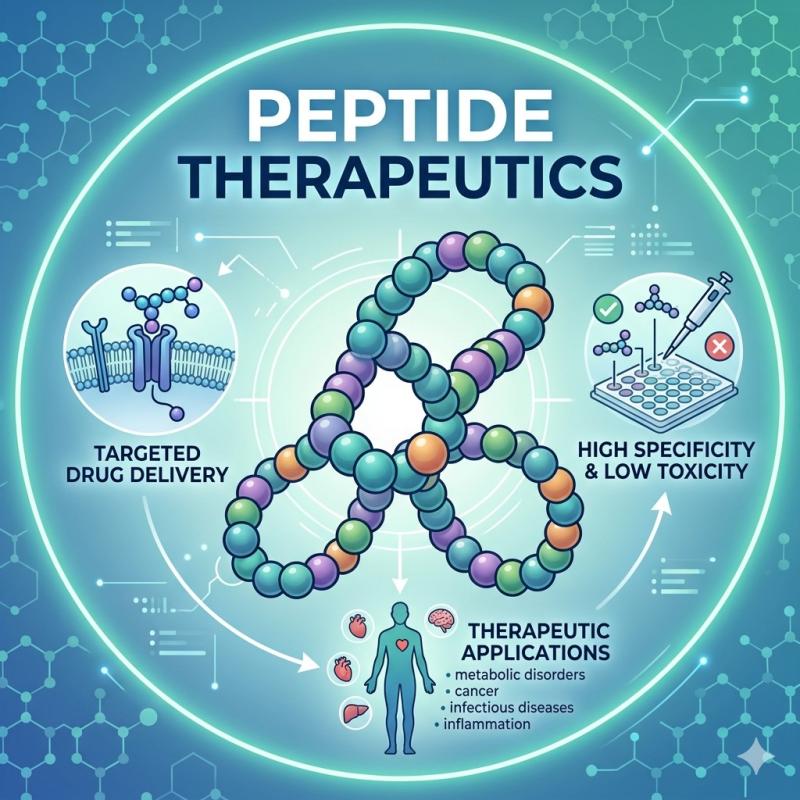
Precision medicine operates on the principle that subtle molecular differences—in genes, proteins, receptors, and signaling pathways—profoundly impact disease progression and treatment response. Unlike traditional pharmaceuticals that often act broadly across multiple systems, leading to potential side effects or variable outcomes, modern biomedical research prioritizes molecules with highly specific biological targets. Peptides, with their amino-acid-based structures, are ideally suited for this approach. They can be engineered to bind with exceptional accuracy to particular receptors, enzymes, or cellular structures, making them invaluable tools for dissecting disease mechanisms at a granular level.
Why Targeted Biomolecules Matter in Research
The ability of peptides to mimic or influence naturally occurring biological processes is a cornerstone of their utility. The human body relies on complex signaling molecules for intercellular communication, and researchers can design synthetic peptides that closely align with these physiological functions. This allows for the study of how subtle changes in signaling affect critical processes such as inflammation, metabolism, immune responses, neurological activity, and tissue repair. In precision medicine, these insights are crucial for identifying dysfunctional pathways in specific patient subgroups, thereby laying the groundwork for highly personalized therapeutic strategies.
Advancing Disease-Specific Research
Precision medicine thrives on differentiation—understanding why patients with the same diagnosis can experience vastly different disease trajectories. Targeted amino acid sequences are increasingly employed in laboratory settings to isolate and study disease-specific mechanisms.
In oncology research, for instance, peptides are instrumental in investigating molecular signals that drive tumor growth, angiogenesis, and immune evasion. By focusing on highly selective biological interactions, researchers can better distinguish between healthy and malignant cells, facilitating the development of targeted interventions that disrupt cancer-specific pathways while sparing healthy tissue.
Similarly, in metabolic and cardiovascular research, peptides help scientists explore how signaling disruptions contribute to conditions like insulin resistance, lipid imbalances, and vascular dysfunction. The precision offered by these compounds accelerates discovery and enhances the accuracy of disease models.
Neurological and Cognitive Research Applications
The brain, with its intricate complexity, presents unique challenges for precision medicine. Peptides have emerged as valuable research tools due to their adaptability and specificity, enabling interactions with specialized receptors and the ability to cross biological barriers with minimal disruption. Researchers are utilizing targeted signaling peptides to study neuroplasticity, cognitive function, stress responses, and neurodegenerative processes. These investigations are particularly relevant for conditions such as Alzheimer’s disease, Parkinson’s disease, depression, and anxiety-related disorders, offering insights into how subtle biochemical changes translate into cognitive and behavioral outcomes.

Role in Immunology and Inflammatory Research
The immune system’s delicate balance of defense and tolerance is often disrupted in chronic inflammation and autoimmune conditions. Precision medicine in immunology leverages peptides to accurately observe and influence immune signaling. Targeted compounds are used to study cytokine activity, immune cell differentiation, and inflammatory cascades, helping to clarify individual variations in immune responses. This research supports the development of tailored approaches for immune-related conditions, including allergies, autoimmune disorders, and chronic inflammatory diseases. Furthermore, research into antimicrobial peptides and their customizable molecular structures holds promise for overcoming the limitations of conventional antibiotics.
Personalized Therapeutic Design and Market Growth
A long-term goal of precision medicine is the ability to design therapies based on an individual’s unique molecular profile. Peptides support this vision by providing modular building blocks that can be adjusted for different biological contexts. Scientists are investigating how genetics, age, gender, environment, and lifestyle influence molecular responsiveness, aiming to customize experimental compounds to a person’s unique biological makeup. While much of this remains in the research phase, the implications for future clinical applications are substantial.
The peptide therapeutics market is experiencing significant growth, reflecting the increasing recognition of their therapeutic potential. The global peptide therapeutics market was estimated at USD 46.4 billion in 2024 and is projected to reach USD 100 billion by 2025 . Another report indicates a market size of USD 140.86 billion in 2025, projected to reach USD 294.58 billion by 2033, growing at a CAGR of 8.73% from 2026 to 2033 . This robust growth is driven by advancements in peptide drug discovery, production technologies, and clinical applications .
Integration With Artificial Intelligence and Data Science
The future of precision medicine research is increasingly intertwined with artificial intelligence (AI) and advanced data analytics. The study of targeted biomolecules generates vast amounts of data on binding affinity, structural behavior, and biological outcomes. Machine learning models are adept at analyzing these datasets to identify patterns that might be missed through traditional analysis. AI-driven simulations can predict how molecular modifications might alter biological interactions before physical testing, accelerating discovery and reducing trial-and-error experimentation, thereby enhancing research efficiency and cost-effectiveness .
Ethical and Regulatory Considerations
As precision medicine research advances, ethical and regulatory considerations become paramount. The development of highly targeted biological tools raises questions about safety, oversight, and appropriate use. Clear distinctions between laboratory research and clinical application are essential for maintaining scientific integrity and public trust. Regulatory frameworks must evolve alongside innovation to ensure responsible and transparent use of experimental compounds. Researchers are emphasizing standardized protocols, reproducibility, and peer-reviewed validation to support ethical progress in this field.
Challenges and Limitations
Despite their immense promise, peptide-based molecular tools face challenges. Issues such as stability, delivery methods, and scalability remain active areas of investigation. Rapid degradation or limited bioavailability can complicate experimental outcomes. Furthermore, biological systems are inherently complex, and even highly specific interactions can trigger unpredictable downstream effects. Precision medicine research must therefore balance optimism with rigorous testing and cautious interpretation of results.
Looking Ahead
The future of precision medicine research is characterized by its pursuit of clarity—understanding disease at its most fundamental levels and responding with equally refined solutions. Targeted amino-acid-based compounds are poised to remain central to this effort, offering researchers unparalleled control over biological interactions. As technologies advance and interdisciplinary collaboration deepens, these tools will continue to shape how scientists study disease, design experiments, and envision personalized care. While challenges persist, the trajectory is clear: precision medicine research is moving toward a future where specificity, adaptability, and data-driven insights drive meaningful breakthroughs in human health.
References
[2] FDA TIDES (Peptides and Oligonucleotides ) Harvest. (n.d.). MDPI. Retrieved April 11, 2026, from
[5] Peptide Therapeutics Market Report 2025-2035. (2026, January 14 ). Business Wire.
[12] The advent of AI for peptide design: An emerging field. (2025, October 15 ). Labiotech.eu.