
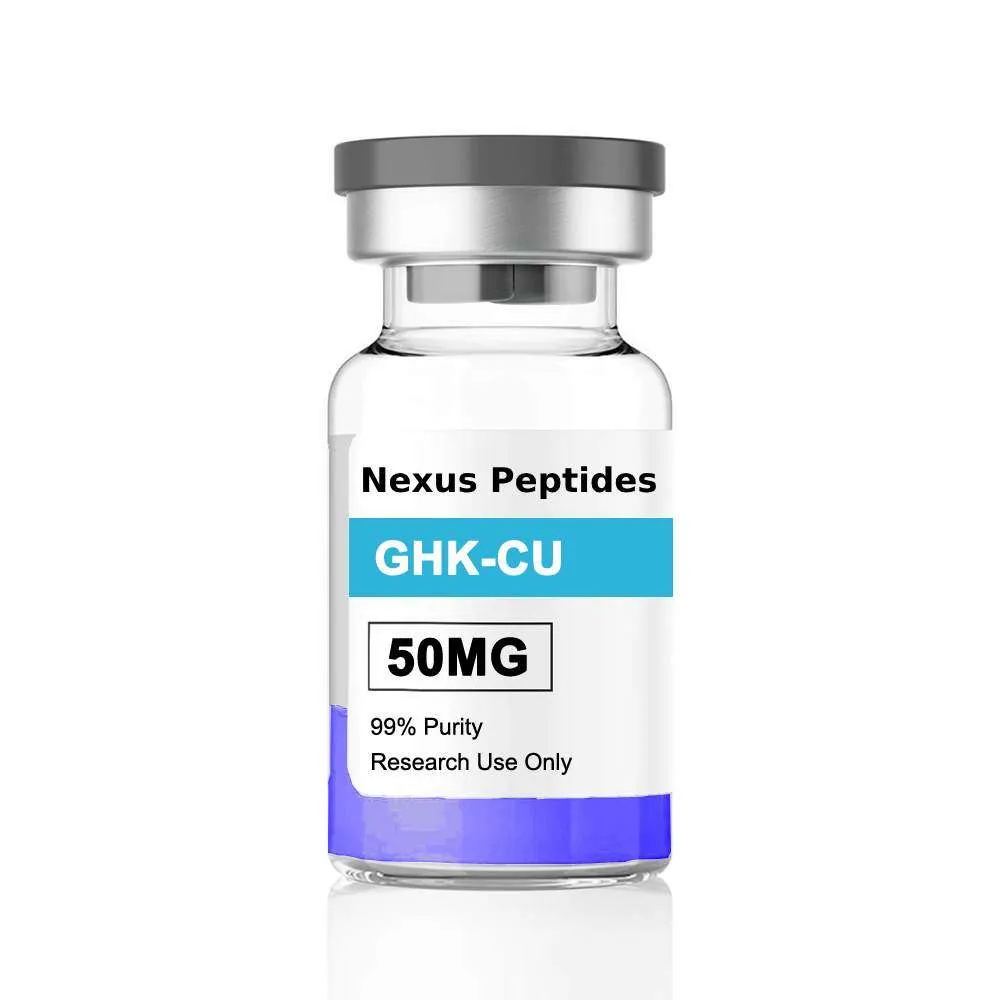
GHK-Cu 50mg/vial *10vial/box
$85.00
GHK-Cu is a copper-binding peptide supplied as 50mg of lyophilized powder for laboratory research applications. Widely studied in regenerative and cellular biology research, GHK-Cu is known for its role in processes related to tissue remodeling, cellular signaling, and skin and hair research. Manufactured to high purity standards, this peptide is intended for controlled scientific and analytical use.
For research use only. Not intended for human consumption, medical use, or therapeut
Buy GHK-Cu Peptide Kit (50mg): The Definitive Extracellular Matrix Regulator
Most peptides merely trigger temporary signaling cascades. GHK-Cu physically rebuilds the extracellular matrix—and that difference is everything. If your laboratory studies dermal reconstruction, accelerated wound healing, or collagen synthesis pathways, the GHK-Cu copper-chelated tripeptide is the most definitive structural regulator available today.
Discovered by Dr. Loren Pickart in 1973, GHK-Cu has decades of documented in vitro data showing physical, structural tissue regeneration. With this 5-vial, 50mg kit, you secure enough highly stable, deep-blue reagent to run serious, multi-arm protocols without constantly restocking mid-study or dealing with degraded active fragments.
What you get in this kit:
-
10mg per vial (5 vials total = 50mg)
-
≥99% HPLC purity with a verifiable Certificate of Analysis (COA)
-
A fully chelated, deep-blue crystalline structure
-
36-month lyophilized shelf life
What Is GHK-Cu Peptide?
GHK-Cu—formally the glycyl-L-histidyl-L-lysine copper complex (CAS: 89030-95-5)—is a naturally occurring tripeptide highly affine to copper (II) ions. In human plasma, the concentration of this specific sequence collapses by over 60% between the ages of 20 and 60. GHK-Cu was isolated to bridge that cellular gap in laboratory models.
When introduced to a cellular matrix, three things happen immediately:
-
TGF-beta Modulation: It governs the transforming growth factor-beta pathway to initiate repair.
-
MMP/TIMP Balancing: It balances tissue-destructive matrix metalloproteinases (specifically MMP-2 and MMP-9) with their inhibitors to prevent unorganized scarring.
-
Structural Upregulation: Dermal fibroblasts aggressively upregulate the production of structural proteins like decorin and elastin.
GHK-Cu vs. GHK Free Base — Why This Specific Peptide Wins
Why do some suppliers sell standard GHK free base instead of the chelated version? Because it is cheaper. Here is the problem: GHK free base lacks the critical $Cu^{2+}$ ion. Without that copper complexation, the sequence fails to trigger the specific, robust remodeling pathways required for high-level tissue engineering. Unchelated GHK introduces catastrophic chemical variables into comparative tissue-density models.
Our GHK-Cu is fully chelated, forming a highly stable, distinct blue complex. Your data stays clean. Your structural synthesis remains reproducible.
Primary Research Applications
-
Collagen Synthesis: GHK-Cu directly stimulates dermal fibroblasts, prompting a massive upregulation of Type I and Type III collagen. Labs use it as a baseline control agent for testing cellular responses to physical structural stress.
-
Wound Healing Models: In complex in vitro scratch assays, GHK-Cu actively prevents the accumulation of disorganized, non-functional scar tissue, shifting the microenvironment toward structured matrix repair.
-
Angiogenesis: It enhances microvascular proliferation by accelerating the localized secretion of basic fibroblast growth factor (bFGF) and vascular endothelial growth factor (VEGF).
-
Neurotrophic Support: Modern research shows it upregulates the synthesis of nerve growth factor (NGF), driving increased axon outgrowth in cultured neural networks.
Kit Specifications
| Detail | Specification |
| Compound | GHK-Cu Peptide (glycyl-L-histidyl-L-lysine copper complex) |
| Chemical Formula | C14H22CuN6O4 |
| Molar Mass | 401.91 g/mol |
| CAS Number | 89030-95-5 |
| Purity | ≥99% HPLC verified |
| Kit Configuration | 5 vials × 10mg = 50mg total |
| Physical Form | Lyophilized powder (Distinct Deep Blue) |
| Intended Use | In vitro laboratory research only |
Reconstitution & Storage Guide
Protect your 36-month shelf-life investment. Proper handling is non-negotiable for preserving the copper complex.
-
Temperature Acclimation: Remove the vial from cold storage 10–15 minutes before starting to prevent uneven dissolution.
-
Sterilize the Stopper: Wipe the rubber stopper with a 70% IPA swab and wait 30 seconds for it to dry. Do this every single time you draw from the vial.
-
Controlled Injection: Draw your bacteriostatic water. Angle the needle so the solvent runs slowly down the inner glass wall. Do not blast the powder directly.
-
Swirl Gently (Never Shake): Roll the vial slowly between your palms in a circular motion until the liquid is a brilliant, clear blue. Do not shake. Shaking irreversibly damages the structural complex.
-
Refrigerate: Store upright at 2°C to 8°C. Use within 14 to 28 days. Keep strictly away from strong oxidizing agents and Vitamin C (ascorbic acid), which will rapidly degrade the copper complex.
FAQs About GHK-Cu Peptide
What is GHK-Cu primarily used for in research?
It acts as a master regulator of the extracellular matrix. Labs use it to balance MMP/TIMP ratios, upregulate Type I and Type III collagen, and prevent unstructured scar tissue formation in in vitro models.
How does GHK-Cu compare to BPC-157?
They serve highly complementary functions. BPC-157 drives immediate angiogenesis and acute fibroblast migration. GHK-Cu governs the maturation phase of tissue repair, standardizing the long-term synthesis of collagen and preventing erratic scar formation.
Is the reconstituted solution supposed to be blue?
Yes. The deep, brilliant blue color is the primary visual indicator of a properly chelated copper (II) complex. If the powder or the liquid is white or cloudy, the copper ion has cleaved or the batch is defective.
Are there any approved drugs containing bulk GHK-Cu?
No. While it appears in various over-the-counter topical cosmetics, bulk lyophilized GHK-Cu remains an investigational compound. It holds no FDA, EMA, or Health Canada approval for clinical injection or systemic therapeutic administration.
⚠️ Research Use Only: GHK-Cu Peptide is intended strictly for in vitro laboratory research and in vivo testing by qualified professionals. Not for human or veterinary consumption. Not evaluated or approved by the FDA, EMA, or Health Canada.


Related products
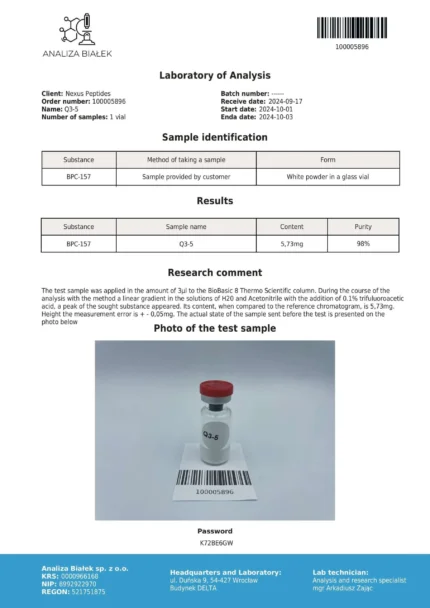
BPC157: 2-5mg*10 vials
Buy BPC-157 a synthetic research peptide supplied in a convenient 10-vial kit, with each vial containing 2mg–5mg of lyophilized peptide. Manufactured for laboratory and scientific research purposes, BPC-157 is widely studied for its potential role in tissue repair, cellular regeneration, and recovery processes. Each vial is sealed for purity and consistency, making it suitable for controlled research applications.
For research use only. Not intended for human consumption, medical use, or therapeutic purposes.
KPV: 5-10mg*10 vials
KPV is a synthetic peptide supplied in a convenient 10-vial kit, with each vial containing 5mg–10mg of lyophilized peptide. Commonly utilized in laboratory research, KPV is studied for its potential involvement in inflammatory pathways, immune responses, and cellular health. Produced to high purity standards, each vial is designed to support consistent and reliable research applications.
For research use only. Not intended for human consumption, medical use, or therapeutic purposes.
Reviews
There are no reviews yet.