
BPC-157 & TB-500
$175.83
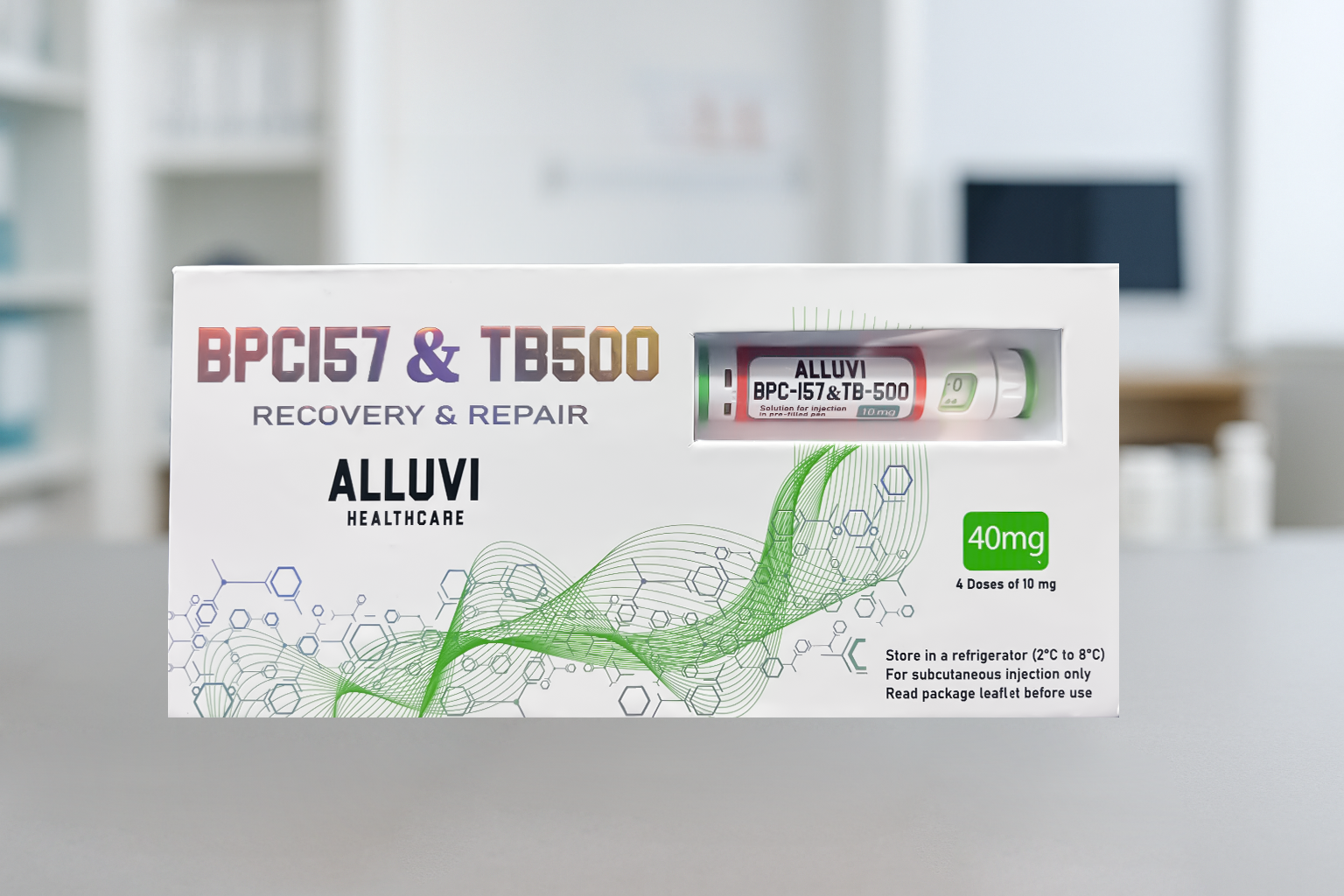
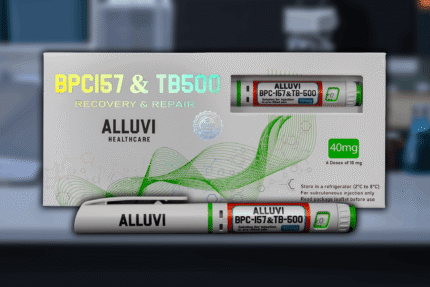
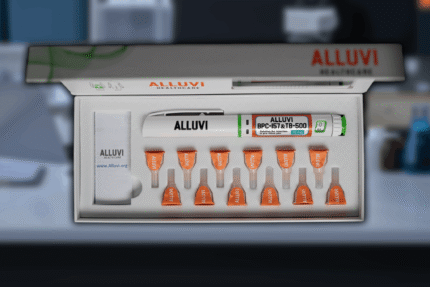
Alluvi Healthcare provides premium-grade BPC-157 & TB-500 40mg, designed exclusively for research and development use. Our sealed formulations ensure purity, consistency, and reliability for laboratories worldwide. Trusted by researchers across the US, UK, Germany, UAE, Australia, Canada, and beyond.
BPC-157 & TB-500: The Ultimate Guide to the Most Talked-About Healing Peptide Stack (2026)
What Are BPC-157 and TB-500? (And Why Everyone Is Talking About Them)
BPC-157 & TB-500, Let me get straight to the point.
If you’ve spent any time in the biohacking, sports medicine, or peptide therapy world, you’ve heard the names BPC-157and TB-500 come up over and over again.
And there’s a very good reason for that.
These two research peptides have become arguably the most studied and most discussed compounds in the regenerative biology space. Researchers, athletes, and biohackers alike are fascinated by their potential — particularly when used together as a <strong>BPC-157 TB-500 blend.
But what does the science actually say?
That’s exactly what we’re going to break down today.
In this guide, you’ll learn:
- What <strong>BPC-157 and <strong>TB-500 are at a molecular level
- How each peptide works individually
- Why the <strong>BPC-157 TB-500 stack is considered synergistic
- What preclinical research says about tissue repair, muscle recovery, and injury healing
- Everything you need to know about dosage, administration, and safety profiles
Let’s dive in.
What Is BPC-157? (Body Protection Compound Explained)
BPC-157 — short for Body Protection Compound-157 — is a stable gastric pentadecapeptide composed of 15 amino acids. It is derived from a protective protein found naturally in human gastric juice.
Here’s what makes it unique:
Unlike many other compounds, BPC-157 is remarkably stable. It doesn’t break down easily in the gut, which is one reason researchers have been fascinated by its systemic effects across multiple tissue types.
In preclinical animal models, BPC-157 benefits have been linked to:
- Tendon and ligament repair — accelerating myotendinous junction healing
- Muscle-to-bone repair — restoring function after detachment injuries
- Gut mucosal healing — maintaining intestinal integrity and homeostasis
- Angiogenesis — promoting the formation of new blood vessels via VEGFR2 signaling
- Anti-inflammatory effects — reducing inflammatory cytokines at injury sites
- Neuroprotection — showing promise in models involving nerve damage
The BPC-157 mechanism of action centers on its ability to activate endothelial repair pathways. Specifically, it promotes VEGFR2 signaling and upregulates endothelial nitric oxide synthase (eNOS) through the Src–Caveolin-1 pathway. The result? Improved vasomotor tone and restored blood flow to damaged tissue.
Think of BPC-157 as the architect of recovery — it goes in first, stabilizes vasculature, limits oxidative stress, and creates the conditions for deeper healing to occur.
What Is TB-500? (Thymosin Beta-4 Explained)
TB-500 is the synthetic form of Thymosin Beta-4 (Tβ4) — a naturally occurring peptide present in virtually all mammalian cells.
Here’s what makes TB-500 special:
It’s one of the most abundant intracellular peptides in the body. And when injury occurs, Tβ4 is rapidly released by platelets and white blood cells at the site of damage.
Unlike traditional growth factors, TB-500 is small, freely diffusible, and not locked to specific receptor targets. That means it can travel to injury sites throughout the body — not just where it was administered.
In research studies, TB-500 benefits include:
- Actin-binding and cytoskeletal reorganization — critical for cell migration and repair
- Wound healing — accelerating re-epithelialization and dermal repair
- Muscle fiber repair — enhancing satellite cell activation
- Corneal and cardiac repair — shown in animal models of infarction
- Anti-fibrotic effects — reducing excessive scar tissue formation
- Anti-apoptotic signaling — protecting cells from premature death
The TB-500 mechanism of action works primarily through actin sequestration. As a major G-actin binding peptide, it frees up actin for cytoskeletal dynamics — enabling faster, more organized cell movement and matrix reconstruction.
Where BPC-157 opens the road, <strong>TB-500 brings the construction crew.
BPC-157 vs TB-500: What’s the Difference?
Let me make this crystal clear because this is where most people get confused.
| Feature | BPC-157 | TB-500 |
|---|---|---|
| Source | Gastric pentadecapeptide | Synthetic Thymosin Beta-4 |
| Primary Action | Vascular stabilization, angiogenesis | Cell migration, actin reorganization |
| Key Pathway | VEGFR2, eNOS, Src-Caveolin-1 | Actin-sequestering, cytoskeletal dynamics |
| Tissue Focus | Tendon, gut, bone, muscle, nerve | Muscle, skin, heart, cornea, connective tissue |
| Phase of Repair | Initiates repair cascade | Amplifies structural remodeling |
| Administration | Subcutaneous or intramuscular injection | Subcutaneous injection |
| Half-Life | Less than 30 minutes | Longer systemic activity |
The bottom line?
They’re different, complementary, and when stacked together — potentially more powerful than either is alone.
Why the BPC-157 & TB-500 Blend Is So Compelling
Here’s where things get really interesting.
Research suggests that <strong>BPC-157 and TB-500 complement each other across vascular, cellular, and structural levels of regeneration.
Think of it as a two-phase system:
Phase 1 — Vascular Stabilization (BPC-157) BPC-157 fires first. It stabilizes blood vessels, limits oxidative stress, activates collateral microvascular networks, and restores perfusion to damaged tissue. This creates the ideal biochemical environment for deep repair.
Phase 2 — Cellular Remodeling (TB-500) TB-500 follows. It amplifies cellular migration, drives cytoskeletal reorganization, stimulates endothelial movement, and orchestrates structural matrix remodeling. It essentially completes the reconstruction process that BPC-157 initiated.
Their combined activity has been linked to faster recovery, more organized collagen architecture, and durable tissue integration in animal studies. From compiled preclinical data, BPC-157 and TB-500 together represent a dual-modality regenerative system — BPC-157 drives vascular and endothelial normalization, while TB-500 orchestrates cellular movement and matrix formation.
This is why the <strong>BPC-157 TB-500 blend has become so popular among researchers and in peptide therapy circles.
The synergy is not theoretical. It mirrors the actual natural wound recovery process — where vascular repair always precedes cellular differentiation and matrix reconstruction.
BPC-157 & TB-500 Benefits: What Preclinical Research Shows
Let’s go through this systematically.
1. Tendon and Ligament Repair
Preclinical studies show BPC-157’s potential for promoting healing in musculoskeletal injuries such as fractures, tendon ruptures, ligament tears, and muscle injuries.When combined with TB-500’s cellular migration effects, the <strong>BPC-157 TB-500 stack for tendon repair becomes one of the most studied peptide protocols in sports medicine research.
2. Muscle Recovery and Regeneration
In rat models of quadriceps detachment, BPC-157 accelerated myotendinous and muscle-to-bone junction repair, restoring full muscle function. The peptide enhanced fibroblast migration, osteoblast proliferation, and vascular reorganization.TB-500 adds to this by enhancing satellite cell activation and reducing leukocyte infiltration — two critical processes in muscle recovery.
3. Angiogenesis and Blood Flow Restoration
BPC-157 maintains vascular patency even under ischemic or occlusion-like conditions by rapidly activating collateral microvascular networks, effectively rerouting blood flow and mitigating endothelial injury. This angiogenesis effect is one of the most clinically interesting aspects of the BPC-157 TB-500 combination.</p>
4. Anti-Inflammatory Properties
BPC-157 enhances growth hormone receptor expression and several pathways involved in cell growth and angiogenesis, while reducing inflammatory cytokines.TB-500 simultaneously reduces leukocyte infiltration and fibrosis. Together, they create a powerful anti-inflammatory peptide effect.
5. Gut and Mucosal Healing
BPC-157, as a gastric pentadecapeptide, was originally studied for its ability to maintain gut mucosal integrity. Research links it to healing of gastrointestinal ulcers, inflammatory bowel conditions, and esophageal damage — making BPC-157 for gut health one of its most studied applications.
6. Skin and Wound Healing
TB-500 promotes cell migration, angiogenesis, anti-inflammatory regulation, and anti-apoptotic signaling — all critical for wound repair — enabling re-epithelialization, endothelial migration, and stem cell differentiation.
7. Collagen Synthesis and Tissue Integrity
The combination of BPC-157 and TB-500 is considered a multi-level approach to regeneration, with these peptides acting at different stages of recovery to create conditions for denser, more elastic, and functionally mature tissue.
BPC-157 Dosage &amp;amp; TB-500 Dosage: What Research Protocols Use
Important disclaimer:</strong> BPC-157 and TB-500 are research peptides. This information is for educational purposes only and reflects dosages observed in preclinical research contexts. These compounds are not approved for human use by the FDA.
BPC-157 Dosage (Research Reference)
- Typical research range: 250mcg – 500mcg per administration
- Frequency: Once or twice daily in animal models
- Administration route: Subcutaneous or intramuscular injection; oral administration also studied for gut applications
- Half-life: Less than 30 minutes in vivo
TB-500 Dosage (Research Reference)
- Typical research range: 2mg – 2.5mg per administration
- Frequency: 1–2 times per week in most protocols
- Administration route: Subcutaneous injection
- Note: As a larger peptide, TB-500 requires less frequent dosing compared to BPC-157
BPC-157 TB-500 Blend Dosage
Pre-mixed <strong>BPC-157 TB-500 blends are typically available in combined formulations such as 20mg blends</strong> (e.g., 10mg BPC-157 + 10mg TB-500), designed for research use with proportional dosing based on subject weight and study parameters.
BPC-157 Side Effects & TB-500 Safety Profile
Let’s be completely transparent here because this matters.
What preclinical data shows: Preclinical safety studies showed no adverse effects across several organ systems. BPC-157 is metabolized in the liver, with a half-life of less than 30 minutes, and is cleared by the kidneys.
What’s missing: No clinical safety data were found for BPC-157 in published human studies. TB-500 similarly relies mostly on animal models with virtually no comprehensive human clinical trial data.
Key risk considerations:
- Unknown long-term effects in humans
- Potential theoretical concern regarding cell proliferation in individuals with undetected pre-cancerous conditions
- Quality and purity risks from unregulated manufacturing sources
- WADA prohibits both compounds tested athletes face serious compliance risks
The science is promising. The human safety database is not yet robust. Anyone considering these compounds for research purposes should source from vendors with verified third-party lab testing and documented batch reports.
BPC-157 &amp;amp; TB-500 for Athletes: The Research Perspective
Here’s something important to know.
-[1.7]”>The reason BPC-157 and TB-500 have gained traction in sports medicine circles is straightforward: athletes get injured, and standard recovery timelines are brutal.
Despite lacking US Food and Drug Administration approval and its use being banned in professional sports, BPC-157 is increasingly used by clinicians and athletes.
A systematic review from PMC covering 544 articles published between 1993 and 2024 found that BPC-157 improved functional, structural, and biomechanical outcomes across muscle, tendon, ligament, and bone injury models.
One retrospective human study showed that 7 out of 12 patients with chronic knee pain reported relief lasting over 6 months following a single intraarticular injection of BPC-157.
That’s not a large sample size. But it’s a meaningful signal.
If you’re a competitive athlete in a tested sport, however — the compliance risk is real. Clinicians recommend that athletes understand their organizations’ rules to remain compliant with medication and supplement safety and testing standards.
t-bold”>How to Source BPC-157 &amp; TB-500 for Research
<p class=”font-claude-response-body break-words whitespace-normal leading-[1.7]”>If you’re purchasing these compounds for legitimate laboratory research, here’s what matters most:
1. Third-Party Lab Testing Never purchase research peptides without verified, independently tested batch reports. The best vendors publish their Certificate of Analysis (CoA) for every batch.
2. Purity Standards Look for suppliers guaranteeing ≥99% purity verified by HPLC (High-Performance Liquid Chromatography) or Mass Spectrometry.
3. Track Record Choose vendors with a documented history of testing — not just promises. Some reputable suppliers have published lab reports dating back to 2019, giving you verifiable quality evidence.
4. Powder Form vs. Reconstituted Highest-quality research peptides are typically supplied in lyophilized (freeze-dried) powder form rather than pre-reconstituted, which ensures longer shelf stability and reduces contamination risk.
BPC-157 TB-500s Stack: The Bottom Line
Let me wrap this up cleanly.
normal leading-[1.7]”>The <strong>BPC-157 and TB-500 peptide stack represents one of the most scientifically coherent combinations in regenerative peptide research.
Here’s the core case for it:
- BPC-157 initiates vascular repair, reduces inflammation, and creates the biochemical foundation for healing
- TB-500 completes the process by amplifying cell migration, organizing collagen architecture, and rebuilding structural tissue integrity
- Together, they mirror the body’s natural multi-phase repair sequence in ways that neither compound achieves as effectively alone
The preclinical evidence base is substantial — hundreds of animal model studies spanning three decades. The human clinical trial data? Still early, still limited, but directionally consistent.
For researchers, this is one of the most compelling areas of peptide biology being studied right now.
For everyone else: stay informed, source responsibly, and always consult a qualified medical professional before considering any experimental compound.
Frequently Asked Questions
Q: What is BPC-157? BPC-157 (Body Protection Compound-157) is a stable synthetic peptide derived from human gastric juice, studied extensively in animal models for tissue repair, angiogenesis, and anti-inflammatory effects.
Q: What is TB-500? TB-500 is the synthetic analog of Thymosin Beta-4 (Tβ4), a naturally occurring actin-binding peptide involved in cell migration, wound healing, and structural tissue remodeling.
<strong>Q: What is the BPC-157 TB-500 blend? A pre-combined formulation of both peptides in a single vial, designed for research purposes to deliver the synergistic benefits of both compounds simultaneously.
<strong>Q: Can you stack BPC-157 and TB-500? In research settings, yes — they are commonly studied together because their mechanisms are complementary. BPC-157 handles vascular repair while TB-500 manages cellular migration and remodeling.
Q: Where can I buy BPC-157 TB-500s? These compounds are available from various research peptide suppliers. Always verify third-party lab testing, purity certificates, and vendor track record before purchasing.


Related products
Mounjaro (Tirzepatide)
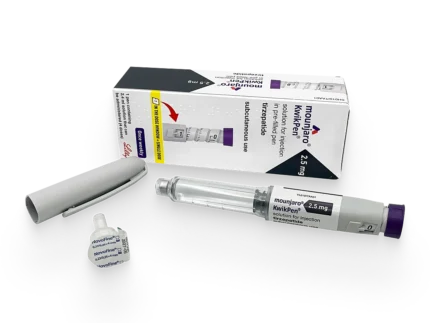
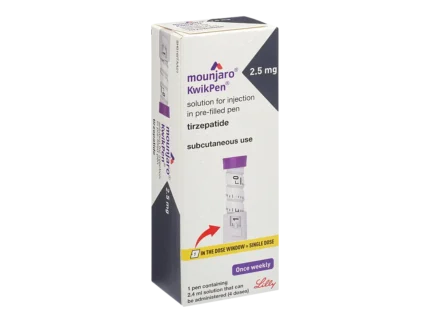
- Once a week self-injection pen which reduces appetite, makes you feel fuller and supports you in losing up to 22.5%* of your starting weight
- Achieve your weight loss goals for less from $176.00
- Earn 5x Health and Beautycard points
NAD+ 1,000mg – Alluvi Healthcare | Alluvi Retatrutide
Reviews
There are no reviews yet.