
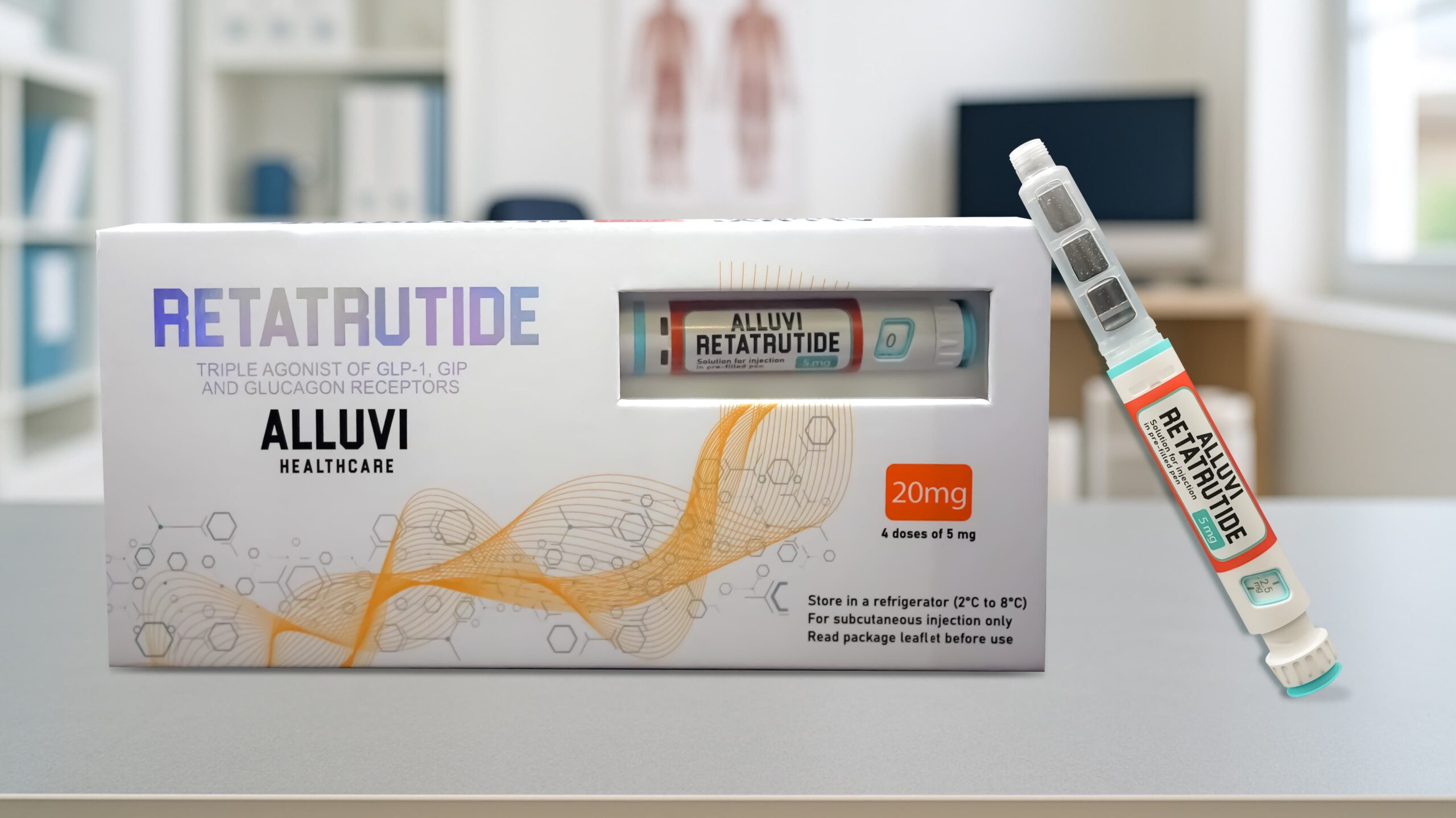
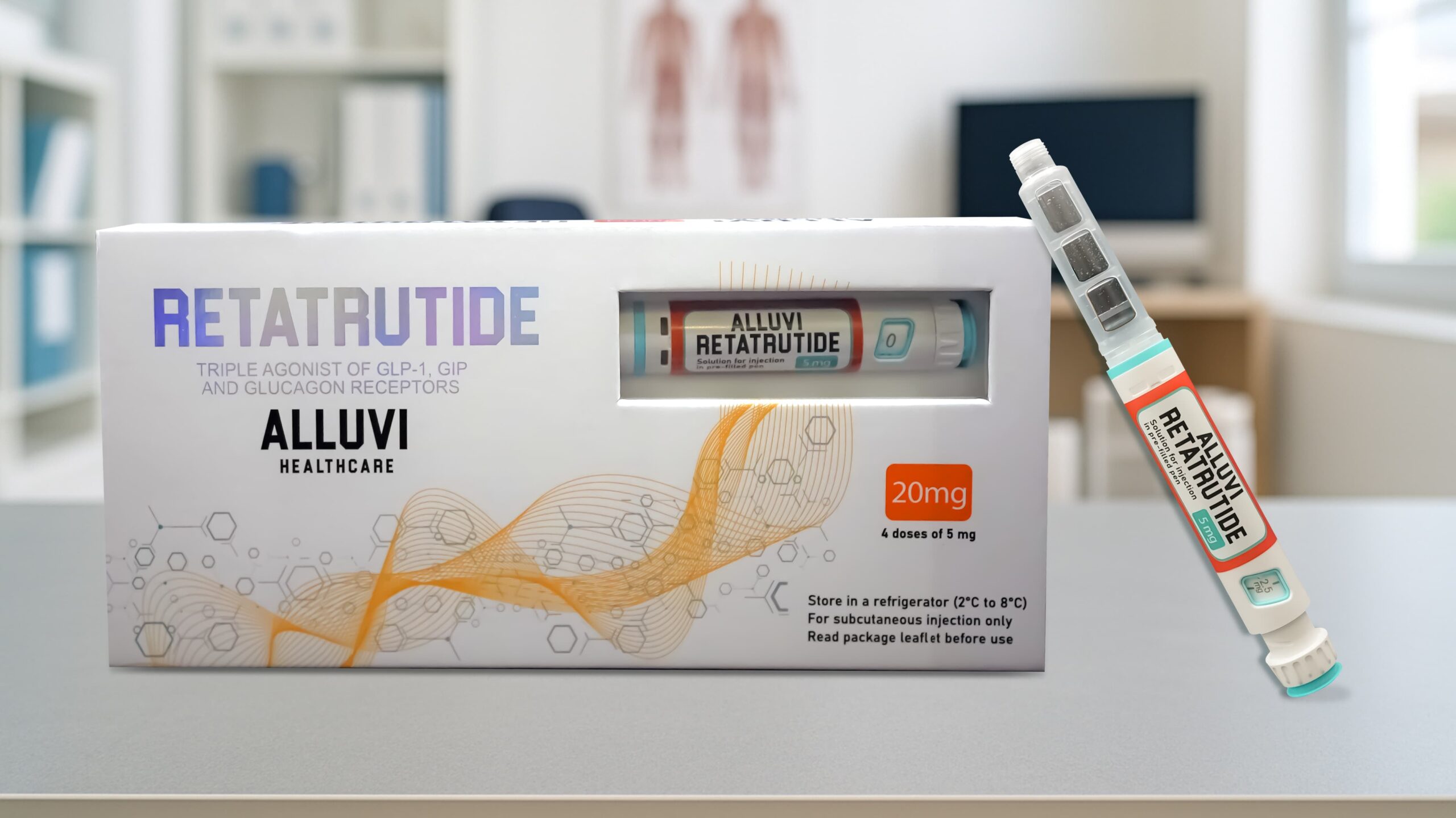


Retatrutide
$200.06
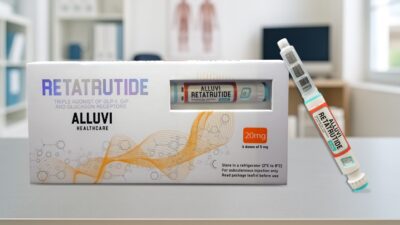
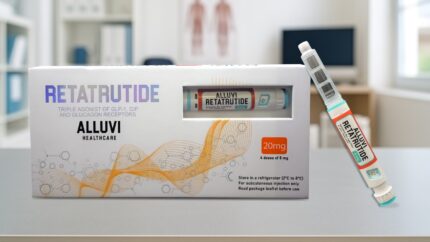
Each Retatrutide 20mg Research kit includes:
Pre-filled Research pen (20mg Retatrutide)
Research information sheet
Retatrutide: The Triple Agonist That’s Rewriting the Rules of Weight Loss (2025 Complete Guide)
What Is Retatrutide? (And Why Everyone in the Weight Loss World Is Talking About It)
Let’s cut straight to it.
Retatrutide is not just another GLP-1 drug.
It’s a first-in-class triple hormone receptor agonist meaning it activates three metabolic receptors simultaneously: GLP-1 (glucagon-like peptide-1), GIP (glucose-dependent insulinotropic polypeptide), and glucagon. Developed by Eli Lilly under the investigational code LY3437943, this once-weekly injectable peptide is quietly setting records in clinical trials.
We’re talking about average weight loss of up to 28.7% of body weight numbers that don’t exist anywhere else in obesity pharmacology.
If you’ve been following semaglutide (Ozempic/Wegovy) or tirzepatide (Mounjaro/Zepbound), you already understand how transformative incretin-based medicines are. Retatrutide takes that framework and supercharges it.
This guide covers everything you need to know:
- What the retatrutide peptide is and how it works
- The latest retatrutide dosing protocols from Phase 3 trials
- Reported retatrutide side effects — and how to manage them
- How it stacks up vs. semaglutide, tirzepatide, and other competitors
- The FDA approval timeline
- Who is an ideal candidate
Let’s dive in.
The Science Behind the Retatrutide Peptide
Here’s the deal — most weight loss drugs target one receptor. Semaglutide hits GLP-1. Tirzepatide hits GLP-1 and GIP (dual agonism). Retatrutide hits all three: GLP-1 + GIP + glucagon.
That third receptor — glucagon — is where retatrutide separates itself from the pack.
Why Glucagon Receptor Agonism Changes Everything
Glucagon is typically associated with raising blood sugar. But when activated in a precisely calibrated way (as in the retatrutide peptide formulation), glucagon receptor stimulation does something remarkable:
- Increases fatty acid oxidation in the liver — meaning your body burns fat for fuel more aggressively
- Reduces hepatic lipogenesis (less fat production in the liver)
- Stimulates lipolysis in adipose tissue through GIP receptor activation
- Boosts energy expenditure — not just reducing intake
This triple-action mechanism is why retatrutide’s efficacy numbers dwarf what we’ve seen before.
Compared to natural GLP-1 and glucagon, the retatrutide peptide shows lower potency at GLP-1 and glucagon receptors but is more potent at the human GIP receptor, giving it a fine-tuned pharmacological fingerprint. It also has a prolonged pharmacokinetic half-life that supports once-weekly dosing.
Retatrutide Dosing: What the Clinical Trials Tell Us
One of the most searched questions online is about retatrutide dosing — and for good reason. The dose escalation protocol plays a critical role in tolerability and outcomes.
Here’s what Phase 2 and Phase 3 trial data shows:
Phase 2 Dosing (Established Safety Profile)
In the landmark Phase 2 trial (published in the New England Journal of Medicine), retatrutide was tested at 1 mg, 4 mg, 8 mg, and 12 mg doses once weekly over 48 weeks.
At 24 weeks:
- The 12 mg dose group achieved a mean weight reduction of 17.5% (approximately 41 lbs)
At 48 weeks:
- The 12 mg dose produced a mean weight reduction of 24.2% — roughly 58 pounds on average
- Participants had not yet reached a weight plateau by trial’s end, suggesting even greater long-term efficacy was possible
Phase 3 Dosing (TRIUMPH Program)
In the Phase 3 TRIUMPH-4 trial (December 2025 results), retatrutide was tested at 9 mg and 12 mg — the two highest doses.
Retatrutide dosing schedule used in TRIUMPH-4:
| Phase | Dose | Duration |
|---|---|---|
| Starting dose | 2 mg once weekly | Weeks 1–4 |
| Step-up 1 | 4 mg once weekly | Weeks 5–8 |
| Step-up 2 (9 mg arm) | 6 mg once weekly | Weeks 9–12 |
| Target dose (9 mg arm) | 9 mg once weekly | Week 13+ |
| Additional step (12 mg arm) | 9 mg once weekly | Weeks 13–16 |
| Target dose (12 mg arm) | 12 mg once weekly | Week 17+ |
This gradual dose escalation is standard practice with incretin-based therapies and is specifically designed to minimize gastrointestinal side effects during the initiation period.
Key takeaway on retatrutide dosing: Start low (2 mg), titrate slowly every 4 weeks, and maintain the target dose (9 mg or 12 mg) throughout the treatment period.
Retatrutide Results: What Does the Data Actually Show?
Let’s talk numbers — because the data is extraordinary.
Phase 3 TRIUMPH-4 Trial (December 2025)
This was a 68-week, randomized, double-blind, placebo-controlled trial involving 445 participants with obesity/overweight and knee osteoarthritis.
Weight Loss Results (Treatment-Regimen Estimand):
- Retatrutide 9 mg: −20.0% body weight (−50.5 lbs on average)
- Retatrutide 12 mg: −23.7% body weight (−60.0 lbs on average)
- Placebo: −4.6% body weight
For participants who stayed on the drug (observed on-treatment):
- Retatrutide 12 mg: −28.7% average body weight loss
- 58.6% of the 12 mg group achieved ≥25% weight loss
- 39.4% achieved ≥30% weight loss
- 23.7% achieved ≥35% weight loss
In absolute terms? An average of up to 71.2 lbs of weight lost. That’s a number we have never seen before in an obesity Phase 3 trial.
Beyond Weight: Additional Metabolic Benefits
Retatrutide doesn’t stop at the scale. The TRIUMPH-4 data also showed:
- Reduced cardiovascular risk markers: significant reductions in non-HDL cholesterol, triglycerides, and hsCRP
- Blood pressure reduction: systolic blood pressure dropped by 14.0 mmHg at the 12 mg dose
- Knee pain relief: WOMAC pain scores reduced by up to 4.5 points (75.8% improvement)
- Liver fat reduction: Earlier Phase 2 data showed significant reductions in liver fat in patients with metabolic dysfunction-associated steatotic liver disease (MASLD)
- Improved insulin sensitivity
Retatrutide Side Effects: The Full Picture
No drug is without trade-offs. Here is a comprehensive breakdown of retatrutide side effects based on clinical trial data.
Most Common Retatrutide Side Effects
These are gastrointestinal in nature — consistent with all incretin-based therapies:
| Side Effect | Retatrutide 9 mg | Retatrutide 12 mg | Placebo |
|---|---|---|---|
| Nausea | 38.1% | 43.2% | 10.7% |
| Diarrhea | 34.7% | 33.1% | 13.4% |
| Constipation | 21.8% | 25.0% | 8.7% |
| Vomiting | 20.4% | 20.9% | ~5% |
| Decreased appetite | Common | Common | Rare |
These side effects are most pronounced during dose escalation and typically diminish as the body adjusts. The slow titration protocol is specifically designed to reduce their impact.
A Notable New Side Effect: Dysesthesia
One side effect that stands out with retatrutide is dysesthesia (abnormal or unpleasant skin sensations), which was reported in:
- 8.8% at 9 mg
- 20.9% at 12 mg
- Only 0.7% with placebo
However, dysesthesia events were generally mild and rarely led to treatment discontinuation.
Discontinuation Rates
- Retatrutide 9 mg: 12.2% discontinued due to adverse events
- Retatrutide 12 mg: 18.2% discontinued due to adverse events
- Placebo: 4.0% discontinued
Notably, some patients discontinued not due to intolerable side effects, but because they were losing weight too rapidl an emerging concern in the obesity medicine space.
Who Should Not Use Retatrutide?
As with all GLP-1-class drugs, retatrutide is investigational and not yet FDA-approved. Based on the drug class, it would typically be contraindicated in:
- Patients with a personal/family history of medullary thyroid carcinoma
- Those with Multiple Endocrine Neoplasia syndrome type 2 (MEN 2)
- Pregnant or breastfeeding individuals
- People with a history of severe GI disorders like gastroparesis
Retatrutide vs. Semaglutide vs. Tirzepatide: How Does It Compare?
This is the comparison everyone wants to see.
| Drug | Mechanism | Max Weight Loss (Clinical Trials) | Dosing |
|---|---|---|---|
| Semaglutide (Wegovy) | GLP-1 agonist (single) | ~15–17% body weight | Once weekly (2.4 mg) |
| Tirzepatide (Zepbound) | GLP-1 + GIP (dual) | ~20–22.5% body weight | Once weekly (15 mg) |
| Retatrutide | GLP-1 + GIP + Glucagon (triple) | Up to 28.7% body weight | Once weekly (9–12 mg) |
The pattern is clear: more receptors = more weight loss. Retatrutide’s triple agonism produces outcomes that outpace both existing approved therapies by a significant margin.
A meta-analysis of randomized controlled trials (2025) confirmed retatrutide’s superiority, showing a mean difference in body weight reduction of −14.33% compared to placebo — with the 12 mg dose consistently outperforming the 4 mg and 8 mg doses.
Retatrutide and Type 2 Diabetes: What the Data Shows
Retatrutide isn’t just a weight loss drug. Its triple receptor mechanism makes it a powerful tool for glycemic control.
In a Phase 3 trial involving patients with type 2 diabetes:
- Participants saw a 1.7 to 2.0% decrease in HbA1c over 40 weeks on the highest dose
- The 12 mg dose group lost an average of 36.6 pounds over the same period
These are outcomes that rival or exceed current best-in-class type 2 diabetes medications.
Retatrutide for MASLD (Fatty Liver Disease)
One of the most exciting emerging applications of retatrutide is in metabolic dysfunction-associated steatotic liver disease (MASLD).
Phase 2 data showed that once-weekly retatrutide produced:
- Significant reduction in liver fat content
- Improved insulin sensitivity
- Reduced markers of hepatic inflammation
Given the close link between obesity, type 2 diabetes, and liver disease, this triple agonist could become a cornerstone therapy for the full spectrum of metabolic syndrome.
Retatrutide FDA Approval: Where Does It Stand in 2026?
As of early 2026, retatrutide is still investigational and not FDA-approved. Here’s the current roadmap:
- Phase 3 TRIUMPH Program: 8 trials total, evaluating retatrutide for:
- Obesity (with and without comorbidities)
- Type 2 diabetes
- Knee osteoarthritis ✅ (TRIUMPH-4 — positive results December 2025)
- Obstructive sleep apnea
- Chronic low back pain
- Cardiovascular and renal outcomes
- MASLD
- 7 additional Phase 3 readouts expected in 2026
- FDA approval, if all trials succeed, is projected for 2026–2027 at the earliest, given the extensive Phase 3 data requirements
The TRIUMPH Phase 3 program represents one of the largest and most ambitious obesity drug trial programs ever conducted.
Who Is a Candidate for Retatrutide?
Based on the clinical trial inclusion criteria and the drug’s mechanism of action, retatrutide is being studied for individuals who:
- Have a BMI ≥ 30 kg/m² (obesity) or BMI ≥ 27 kg/m² with at least one weight-related comorbidity (e.g., type 2 diabetes, hypertension, osteoarthritis, sleep apnea)
- Have not responded adequately to lifestyle interventions alone
- Are seeking a once-weekly injectable therapy
- May also benefit from improvements in glycemic control, liver health, or joint pain
Retatrutide: Key Takeaways
Let’s bring it all together.
1. It’s the most powerful weight loss drug in clinical development. Up to 28.7% body weight reduction at 68 weeks is unprecedented.
2. The triple mechanism is the differentiator. GLP-1 + GIP + glucagon receptor agonism works synergistically in ways dual or single agonists cannot replicate.
3. Retatrutide dosing starts at 2 mg and titrates slowly. The step-up schedule every 4 weeks minimizes gastrointestinal side effects.
4. Retatrutide side effects are real but manageable. GI issues dominate, especially in early weeks. Dysesthesia is a notable new finding. Proper dose titration is key.
5. It goes beyond weight loss. Cardiovascular risk reduction, liver fat reduction, glycemic control, and joint pain improvement all fall within its therapeutic reach.
6. FDA approval is still pending. Retatrutide is not yet commercially available. Additional Phase 3 data in 2026 will determine its regulatory path.
Bottom Line
Retatrutide represents the next frontier in metabolic medicine. Whether you’re a clinician tracking the obesity pharmacotherapy pipeline, a patient exploring options, or a researcher following incretin science this is the drug to watch.
The Phase 3 data rolling in through 2026 will determine whether retatrutide can deliver on its extraordinary promise at scale. If the data holds, we may be looking at the most significant advance in obesity treatment in a generation.
Disclaimer: Retatrutide is an investigational drug and is not currently FDA-approved for any indication. This article is for informational purposes only and does not constitute medical advice. Consult a licensed healthcare provider before starting, stopping, or changing any treatment.
Frequently Asked Questions (FAQ)
What is retatrutide? Retatrutide (LY3437943) is an investigational once-weekly injectable triple hormone receptor agonist developed by Eli Lilly, targeting GLP-1, GIP, and glucagon receptors for the treatment of obesity and type 2 diabetes.
How does the retatrutide peptide work? The retatrutide peptide activates three metabolic hormone receptors simultaneously, reducing appetite, increasing energy expenditure, improving insulin sensitivity, and promoting fat oxidation in the liver and adipose tissue.
What is the retatrutide dosing schedule? Retatrutides starts at 2 mg once weekly and is titrated in 4-week intervals to a target dose of either 9 mg or 12 mg once weekly.
What are the most common retatrutide side effects? The most common retatrutides side effects are nausea, diarrhea, constipation, vomiting, and decreased appetite consistent with other GLP-1-class drugs. Dysesthesia is a notable finding specific to retatrutides, occurring in up to 20.9% at the 12 mg dose.
How does retatrutides compare to semaglutide? Retatrutides produces significantly greater weight loss than semaglutide (up to 28.7% vs. ~17%) due to its triple receptor mechanism that adds GIP and glucagon agonism to GLP-1 activity.
Is retatrutides FDA-approved? No. As of early 2026, retatrutidse is still under Phase 3 clinical investigation. FDA approval is expected no earlier than 2026–2027, pending successful trial outcomes.
Can retatrutide treat type 2 diabetes? Yes — it is being studied specifically for type 2 diabetes management in Phase 3 trials, with strong Phase 2 data showing significant HbA1c reductions alongside weight loss.


Related products
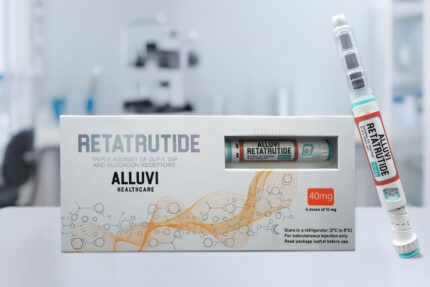
Retatrutide 40mg (R&D Only) – Alluvi Healthcare | Alluvi Retatrutide
Reviews
There are no reviews yet.